
Pula, Croatia
A Roman city that still uses its harbour
Pula is not a resort invented for August. It is a working town with an amphitheatre, a market, and water clear enough to swim before coffee.
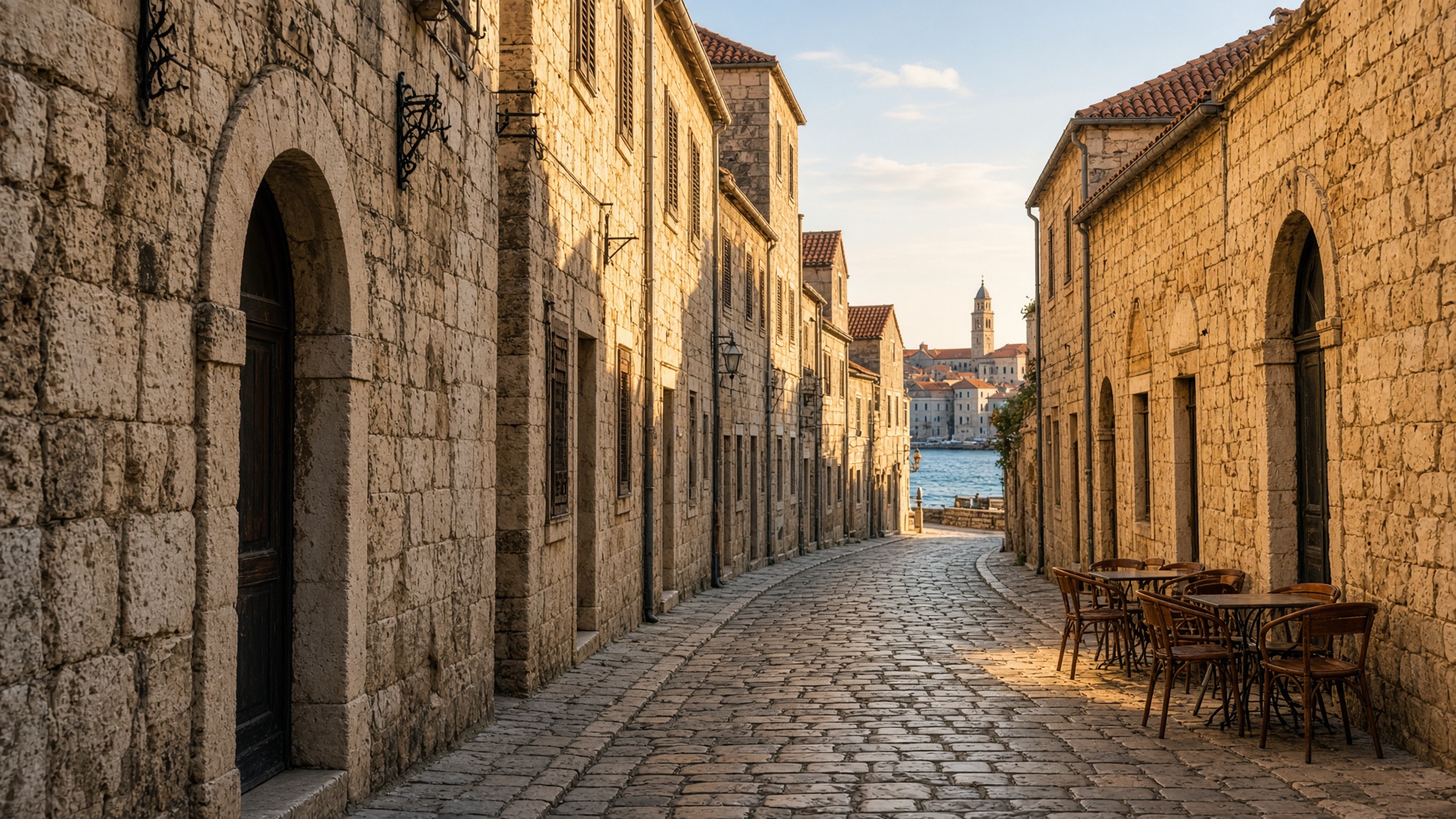
The Arena and the old town
The amphitheatre is one of the best-preserved in the world, still used for concerts in summer. Go at opening or at dusk, not at midday. From there the old town is a short walk: the Forum, the Temple of Augustus, the Arch of the Sergii, and streets that stay in shade.
The market near Narodni trg is the useful kind — fruit, fish, and bread — not a souvenir hall. We send guests there before we send them to a restaurant.
The water
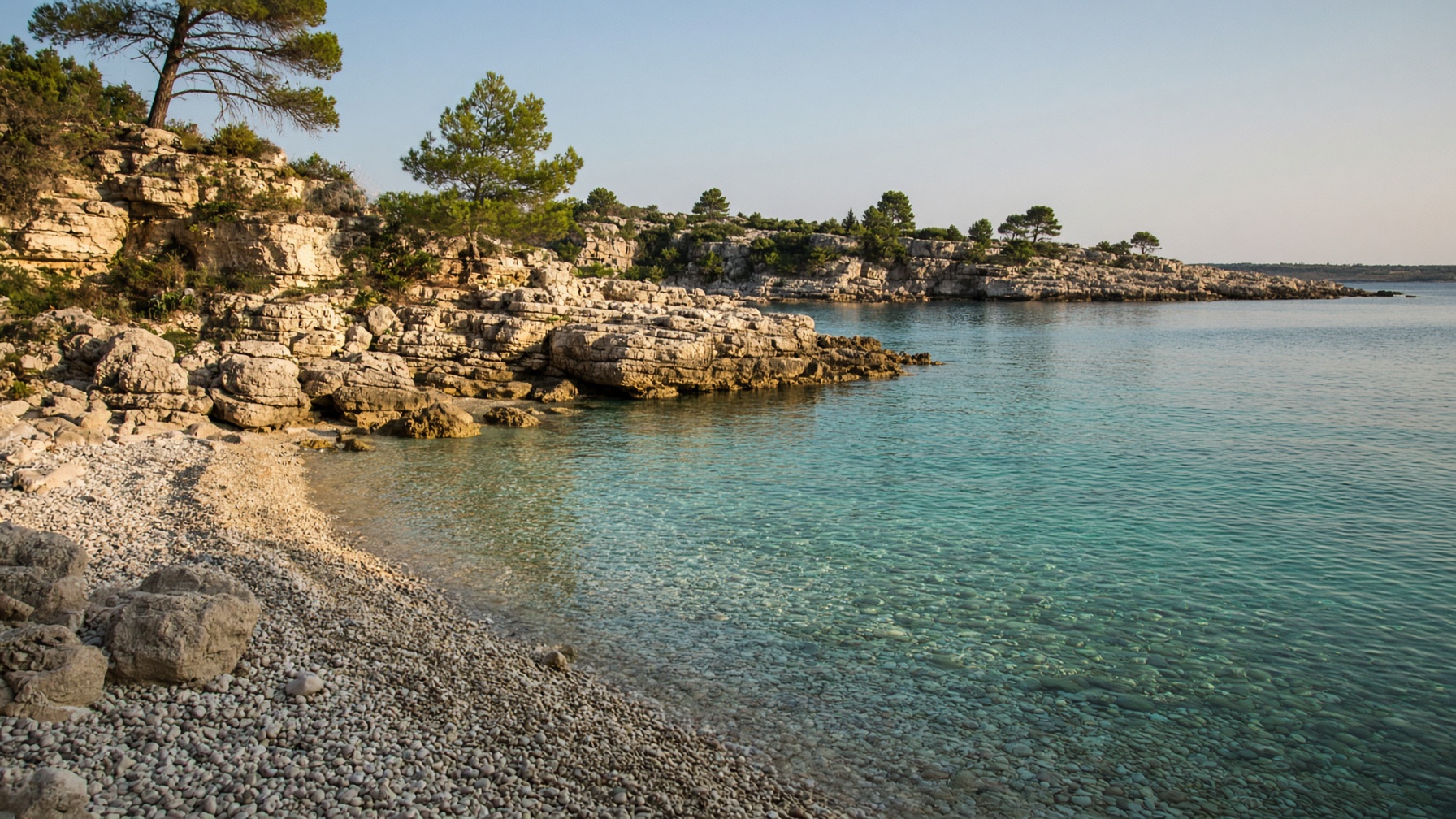
The coast around Pula is limestone and pine, not long sand. Pebble coves, ladders into deep water, and swimming that starts in May and runs into October. Mornings are quieter. Bring water shoes.
What we eat
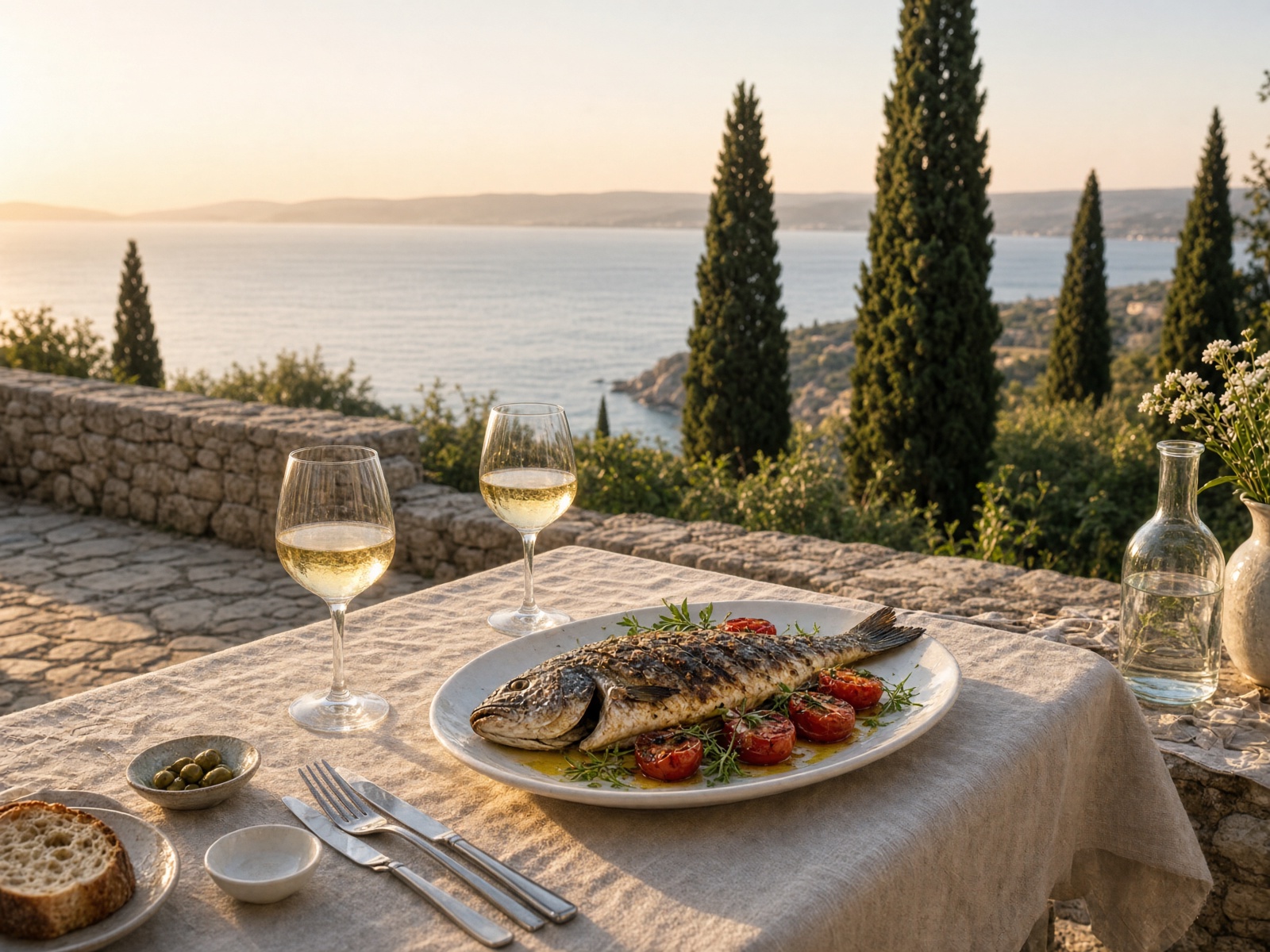
Istria is olive oil, malvazija, pršut, and fish that was in the water that morning. Eat simply: a konoba for lunch, a terrace in the evening, gelato walking home. If you cook in the apartment, the market will fill the kitchen.
Easy days from Pula
- Brijuni. A short boat from Fažana. Deer on the lawns, Roman ruins, and a swim on the island side.
- Rovinj. Under an hour by car. A painted harbour and a hill town that photographs well at sunset.
- Cape Kamenjak. The southern tip of Istria. Wild coves, a slow drive through pines, no need to rush.
- Vodnjan / olive mills. Oil tastings and a quieter inland afternoon when the coast is busy.
Getting here
- Air. Pula Airport (PUY) is a short drive from town. Seasonal flights from many European cities.
- Car. The Istrian motorway (Učka tunnel from the east) brings you in cleanly. Parking is at the house.
- Without a car. Possible. Buses cover the old town and the southern coast. A bicycle is enough for the water.